
Daily Bible Reading Plans to help you read and understand God’s Word
Benefits of reading Scripture in community
Build consistent
bible reading habits
throughout the weekGrow in biblical literacy
and understanding of
God’s wordUnite with other
bible readers all over
the world
The best way to Participate
-
Get Your Guide
The She Reads Truth community is reading together every day.
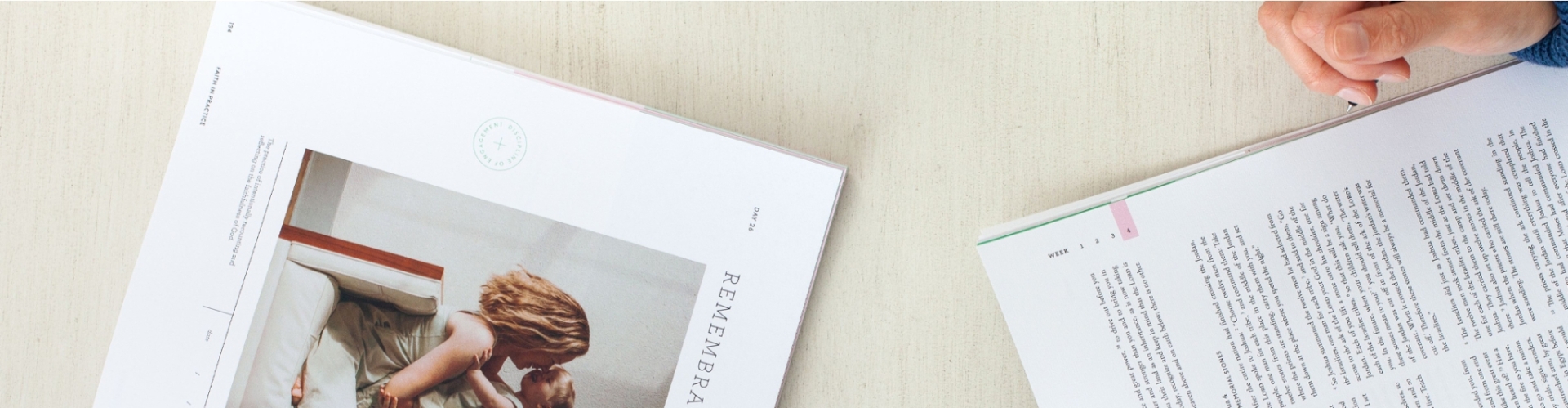
We’ll send you a beautiful printed Reading Guide in plenty of time for our upcoming community Reading Plan. -
Start Reading
On Day 1, you’ll dig deep into Scripture alongside a global community of women, all reading the same passages. Join the conversation online with thoughts and reflections.
-
Repeat
Congrats! You did it! Come back tomorrow and experience the impact of daily Bible reading.
Not quite ready yet?
Read for free from our current community plan posted below.
Today’s Community Reading
Teachings on Stewardship
- Luke
- Day 23
Scripture Reading: Luke 16:1-31, Proverbs 15:16, 1 Corinthians 4:7-13
I’m about to share one of the worst four-letter words in my experience of the English language. I hear it all day every day, and I grit my teeth whenever someone lets it fly. Even my own three children throw this word around like it’s nothing. The word of which I speak is this: just.
Allow me to illustrate how my little angels might utilize this gem of the English language.
Me: Please go empty the dishwasher.
Kid A: Can I do it later? I just woke up.
Me: That’s enough ice cream; put it back in the freezer.
Kid B: Fine, but just one more bite?
Me: Turn your phone off, and do something useful with your life.
Kid C: I just picked it up, Dad. Can I just finish this one thing?
The incessant J-bombs irk me so very much. All I want is for them to trust my wisdom, my intentions, and my concern for their best interests. I just want them to do what I ask without haggling on the details.
Uh oh. Looks like I’m not innocent here.
Upon further reflection, I realize that I use the same word with my heavenly Father as much if not more than my kids do with me.
Now, I should emphasize that this is about more than the word just. It’s a heart issue that reveals how I want absolute control of everything God has given me. I want to decide when, where, and how I deploy my time and energy. I want to negotiate with God’s expectations, especially on what I consider little things.
But we can’t forget Jesus’s own words: “Whoever is faithful in very little is also faithful in much, and whoever is unrighteous in very little is also unrighteous in much” (Luke 16:10). The little stuff matters, and quibbling with God over the terms of my obedience is evidence that I am predisposed to resisting His authority on the big stuff as well.
When I invite the Lord to search and know my heart, the problem explodes into full view: I am constantly trying to wrest control of my life from God’s hands so I can govern my own universe.
I refuse to wallow in shame about it, though. In fact, I praise God that I can see and name this insidious foible of mine. Only by bringing it to the light can I repent and submit it to the Lord.
How awesome it would be if I didn’t attempt to qualify the terms of my allegiance to God. What if I said, “Yes, Lord,” and eagerly ran in whatever direction He sent me? What I want for my life, after all, is to be wholly devoted to God in thought, word, and deed. Whether in the most innocuous details or in true life-or-death scenarios, I want my heart, mind, soul, and strength to belong to the Lord.
Just imagine what God could do!
Written by Alex Florez
how would you like to participate?
-
most popular
Read in Community
- A printed Reading Guide delivered each month
- Real-time conversation with the global community
- Free access to plans in the She Reads Truth app
- Exclusive offers on our other great resources
- 23% savings on each Daily Reading Guide
$ 20 /READING PLAN -
Read Independently
- Choose one of our printed Reading Guides in the bookstore
- Read at your own pace
- Access archived community prompts and conversation
$ 26 /READING PLAN
or read today’s reading for free online